Discover the Power of Deep Breathing
Discover the Power of Deep Breathing
We all breathe, but have you ever considered the remarkable health benefits of deep breathing? In our fast-paced lives, stress tends to build up. Fortunately, deep breathing provides a simple and effective solution.
What Is Deep Breathing?
Deep breathing involves slow, controlled inhalations and exhalations. Unlike shallow breathing, which only involves the chest, deep breathing uses the diaphragm. This technique optimizes oxygen exchange and promotes relaxation.
Benefits of Deep Breathing
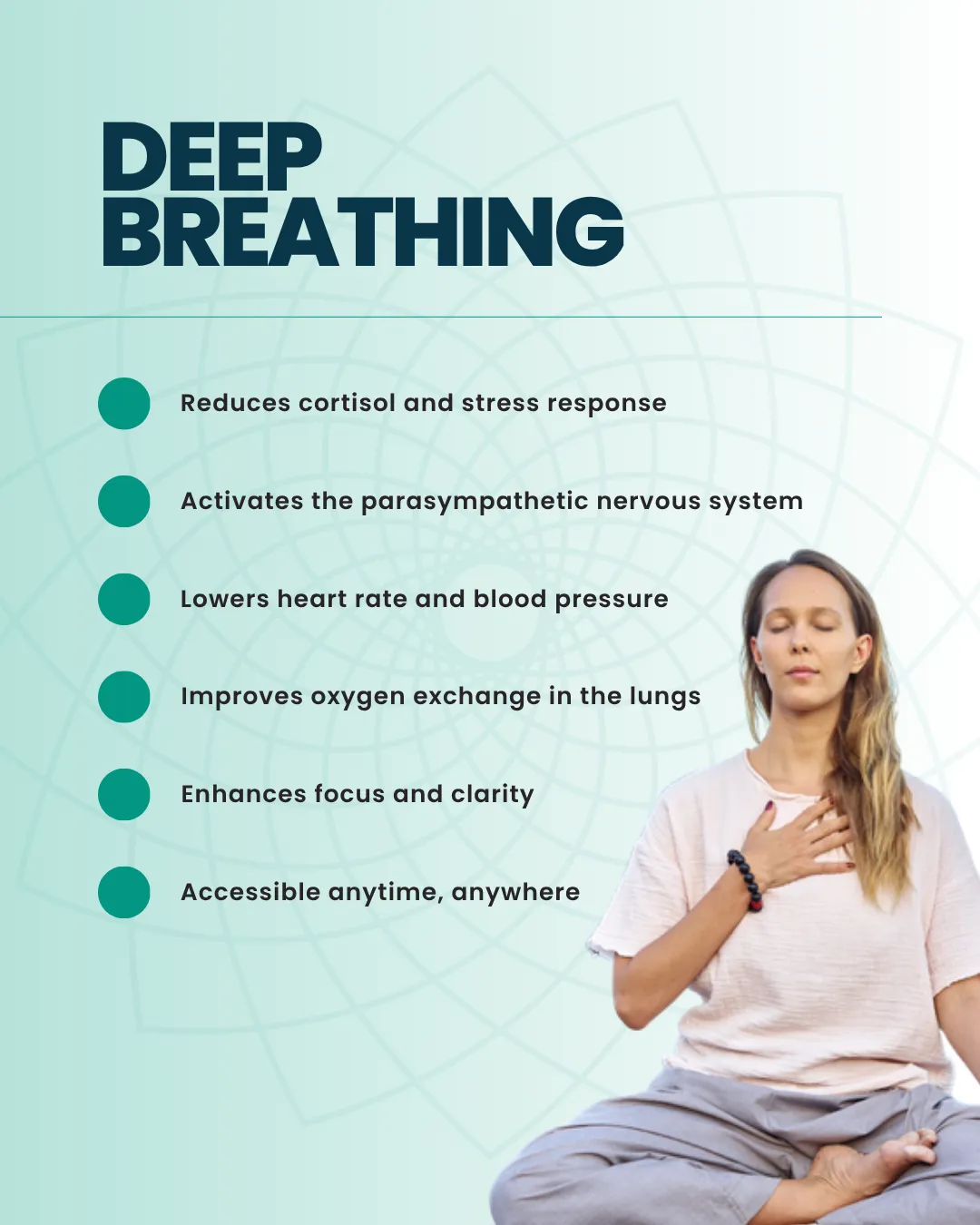
- Reduces Cortisol and Stress Response: Deep breathing naturally lowers cortisol levels, helping you feel calmer. When you breathe deeply, your body reduces its production of stress hormones, resulting in a more relaxed state.
- Activates the Parasympathetic Nervous System: This technique stimulates your parasympathetic nervous system, which is responsible for rest and digestion. When activated, it signals your body to relax and unwind.
- Lowers Heart Rate and Blood Pressure: Regular practice of deep breathing can lower heart rate and blood pressure. This not only supports heart health but also contributes to overall well-being.
- Improves Oxygen Exchange in the Lungs: Deep breathing ensures better circulation by allowing more oxygen into the bloodstream. It energizes your body and supports cellular function.
- Enhances Focus and Clarity: By reducing stress, deep breathing helps sharpen focus. It clears the mind, making it easier to concentrate on tasks and think clearly.
- Accessible Anytime, Anywhere: The best part? Deep breathing can be done anytime, anywhere. Whether you're at home, work, or school, this practice is easy to fit into your day.
How to Practice Deep Breathing
- Find a comfortable sitting or lying position.
- Place one hand on your chest and the other on your belly.
- Inhale deeply through your nose, ensuring your belly rises more than your chest.
- Exhale slowly through your mouth.
- Repeat for five to ten breaths, focusing on each inhale and exhale.
When to Practice
Incorporate deep breathing into your routine:
- Start your day with a few deep breaths.
- Take a break during work for quick breathing exercises.
- Use deep breathing before bed to promote good sleep.
- Whenever you feel stressed or anxious, pause for a moment of deep breathing.
Final Thoughts
Deep breathing is a powerful, natural tool for improving health and well-being. With just a few minutes a day, you can experience less stress, clearer thinking, and improved physical health. Try making deep breathing a regular part of your day to enjoy these benefits.
