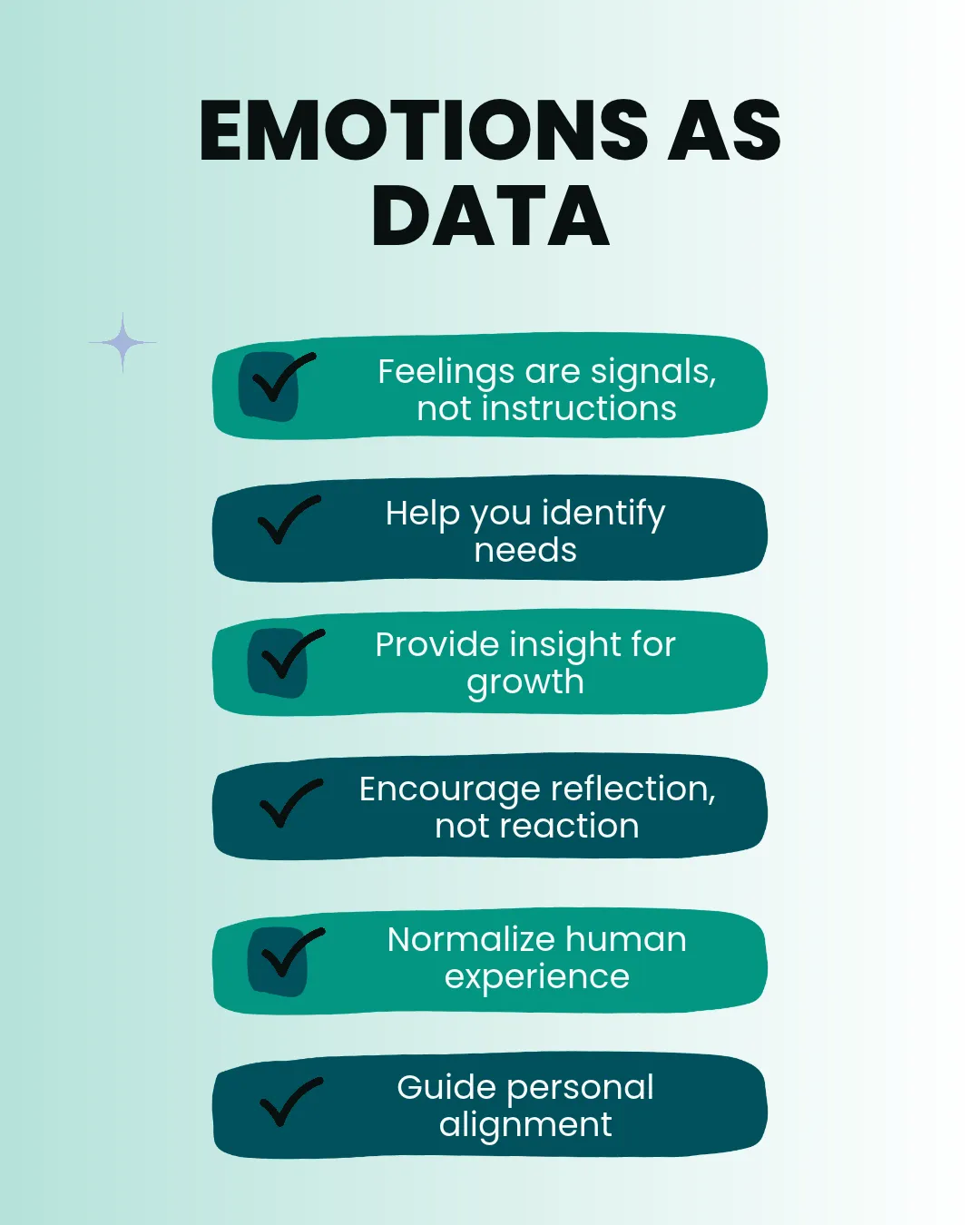
Understanding Emotions as Valuable Data
Understanding Emotions as Valuable Data
Emotions are a fundamental part of what makes us human. They affect our thoughts, influence our behaviors, and drive many of our decisions. But what if we started viewing emotions not just as reactions but as valuable data? This perspective can be tremendously helpful for personal growth and overall well-being.
Feelings as Signals, Not Instructions
One of the first steps in understanding emotions as data is recognizing that they are signals, not instructions. When you feel a certain way, it's your body's way of signaling that something needs your attention. For instance, feeling anxious might not mean you should run away but rather that you should take a closer look at what’s causing your anxiety.
Helping You Identify Needs
Emotions can be guides to identifying your needs. For example, hunger signals the need for food, but emotions can also indicate when you need rest, connection, or time for self-reflection. Listening to these signals can help you understand what actions to take to meet those needs.
- Example 1: If you feel lonely, it may signal a need for social interaction.
- Example 2: Feeling frustrated might indicate a need to set boundaries or change an approach.
Providing Insight for Growth
Your emotions also offer valuable insights for personal growth. When you examine how you feel and why you feel that way, you can learn more about yourself and what you need to work on. This understanding can guide both personal and professional development.
Encouraging Reflection, Not Reaction
Emotions can often lead to quick reactions. However, if you train yourself to reflect instead of react, you'll find it easier to make informed decisions. This process involves pausing, thinking, and then deciding how best to respond.
- Pause: Take a moment to breathe before acting.
- Reflect: Consider why you are feeling a certain way.
- Respond: Choose the best action that aligns with your values and needs.
Normalizing Human Experience
Feeling a wide range of emotions is a normal part of the human experience. Understanding this can help you accept your feelings without judgment. When you view emotions as data, it becomes easier to acknowledge them as natural parts of life, rather than burdens.
Guiding Personal Alignment
Emotions can guide you towards personal alignment. When you understand and listen to your emotional data, you’re better equipped to make choices that align with your values and goals. This involves recognizing what truly matters to you and ensuring your actions reflect those priorities.
By viewing emotions as valuable data, you empower yourself to make decisions that enhance your well-being. It's a journey every person can take towards a more balanced and fulfilling life.
Remember, your emotions are not enemies or mysteries, but essential parts of your everyday toolkit for living a happier and healthier life.
